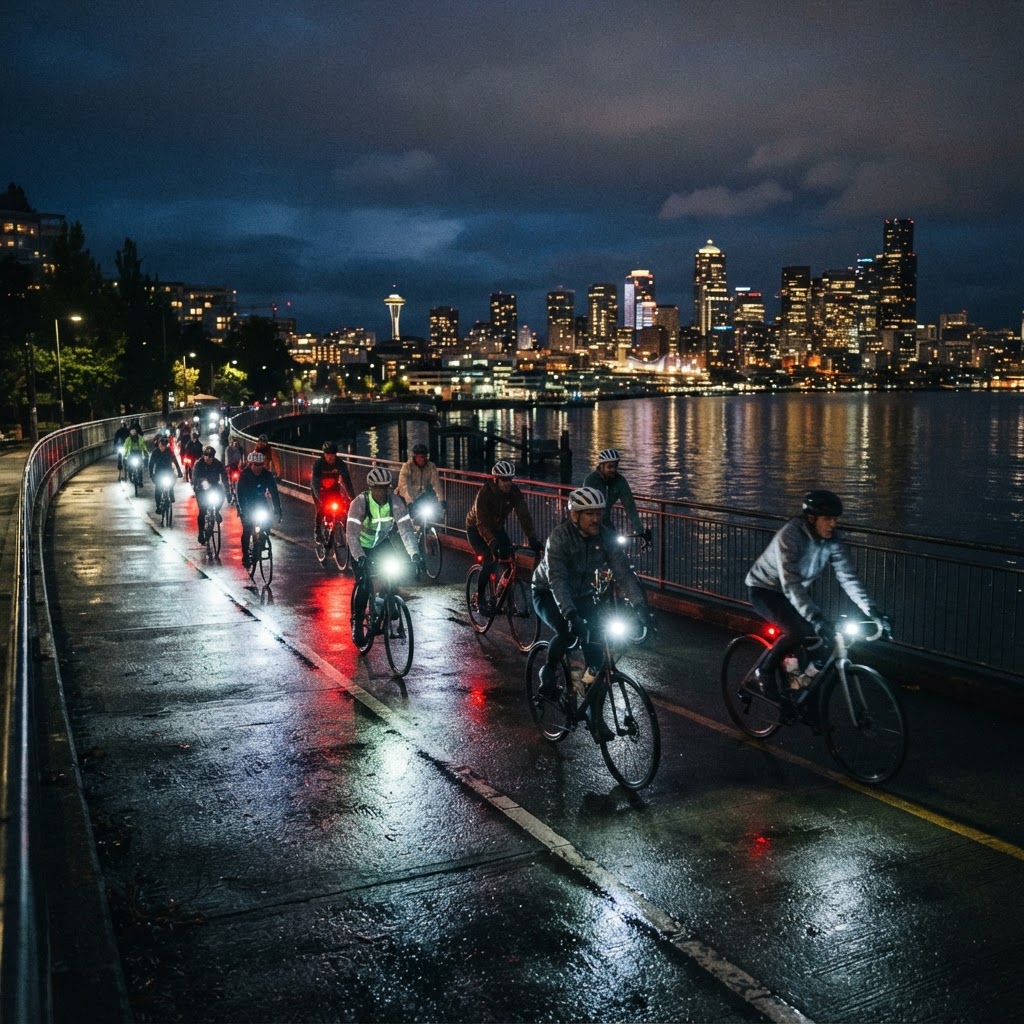
Seattle's short winter days don't have to end your riding season. With the right lights, gear, and route choices, night riding can be safe, enjoyable, and even magical.
Lighting Essentials
Good lighting is non-negotiable for night riding. You need a bright front light (at least 500 lumens, ideally 800+) to see the road or trail ahead, and a bright rear flasher to be seen by others. For mountain biking at night, you'll want 1000+ lumens, preferably with a helmet-mounted light in addition to a bar light for better visibility on technical trails.
Be Seen, Be Safe
Visibility is your top priority. Wear reflective clothing or a reflective vest. Use multiple lights—a front light, rear flasher, and even wheel or frame lights help drivers see you. Assume drivers can't see you, and ride defensively. Stick to well-lit roads and bike paths when possible.
Best Night Riding Routes in Seattle
The Burke-Gilman Trail is well-lit in sections and popular with night commuters. The Alki Beach Trail offers a beautiful night ride with city lights reflecting off the water. For mountain biking, Colonnade Park is sheltered under I-5 and rideable at night with lights. Duthie Hill is also popular for night rides, though you'll need strong lights.
Gear for Night Riding
In addition to lights, dress warmly—temperatures drop significantly after dark. Layer up, wear gloves, and consider a skull cap under your helmet. Use clear or light-colored glasses to protect your eyes from debris and cold air. Bring extra batteries or a power bank for long rides.
Night Riding Safety Tips
Ride slower than you would in daylight—hazards are harder to see. Avoid riding alone on remote trails at night. Let someone know your route and expected return time. Carry a phone and basic repair kit. Start with familiar routes before exploring new ones at night.
Comments (0)
Log in to join the discussion
No comments yet. Be the first to share your thoughts!